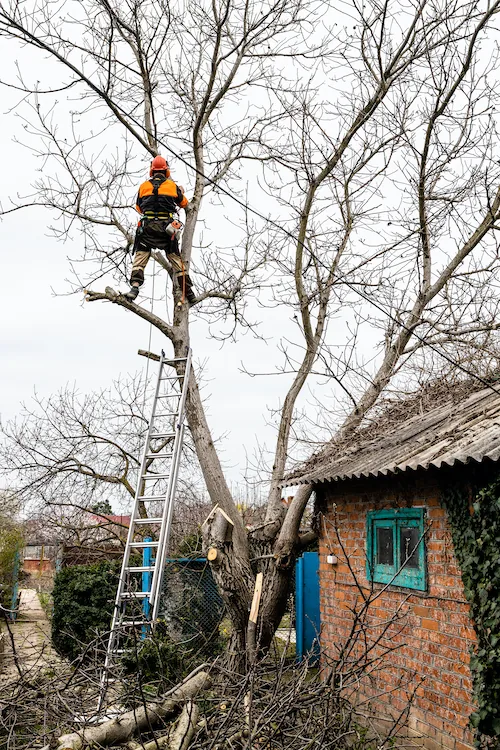
Tree Removal
Full removals on tight coastal blocks, including dismantles by rope and crane-assisted lifts.
Learn more →Removals, pruning, stumps and storm callouts on the tightest blocks in Sydney.
The Eastern Suburbs is one of the hardest places in Sydney to run a tree job. The streets are narrow, the blocks are small, half the properties have no side access wider than a person, and the trees are often older and larger than the houses around them. Add three councils with strict tree preservation orders and heritage conservation areas layered over the top, and a job that looks like an afternoon's work on paper becomes a permit application, a traffic plan and a crane booking.
That is the work we arrange every day, from the sandstone and salt of Bondi and Coogee through to the harbourside blocks at Vaucluse and Rose Bay and the terrace lanes of Paddington.
Three council areas cover most of the Eastern Suburbs: Waverley, Randwick and Woollahra. All three protect trees through a tree preservation order or its equivalent in the local development control plan, and all three require an application before most removal or significant pruning goes ahead. The application fees are modest — Randwick charges $76 for a single tree, and Waverley charges $77 for one tree plus $31 for each additional tree — but the assessment is not a formality, and the penalties for cutting without consent under NSW law run from $2,000 into the millions for a protected tree.
On top of that, the heritage conservation areas across Paddington and much of Woollahra add a second approval layer, because a mature street tree or a garden fig inside a conservation area is treated as part of the heritage fabric rather than as a plant. Our council tree permit guide sets out what each council looks at and what a decent application includes.
Salt-laden easterlies come off the water every afternoon from Bondi to Maroubra and they change how trees grow and how they fail. Norfolk Island pines along the beachfronts are wind-shaped, salt-hardened and mostly council-owned. Coastal banksia and tea tree hold sand together on the dunes and behind the cliffs. Behind them, the older gardens of Woollahra and Randwick carry enormous Moreton Bay figs — many of them individually protected, with buttress roots that have been lifting footpaths and boundary walls for decades.
A crew that treats all of that as generic "tree work" will either damage something or price it wrong. What we quote reflects the species, the exposure, the soil it is standing in and how a machine — if any machine at all — gets near it.
We will not top a healthy fig or a mature gum to a stub because it is blocking a view. Topping produces a mass of weakly attached regrowth that is more dangerous in five years than the original canopy, and in Woollahra and Waverley it is also the fastest way to attract a council investigation. We will not quote a protected tree as though consent is guaranteed, and we will not start work on a tree covered by a preservation order until the paperwork is in hand.
Access is what moves the number here more than height does. A ten-metre gum with a driveway beside it is a routine job; the same tree behind a Paddington terrace, reachable only through the house, is a completely different quote. The tree removal cost guide explains every factor, with the honest ranges rather than a headline price.
Call (02) 9538 7842, tell us the suburb and what the tree is doing, and we will get someone out to look at it. You can also send the details through, read more about how the service works, check the areas we cover, or browse the common questions and our tree care advice.
Waverley, Randwick and Woollahra all run strict tree preservation orders. We quote the approval path with the job, not after it.
Half the Eastern Suburbs has no side gate. Narrow-track machines, rope access and hand removal through the house when that is the only way in.
Norfolk Island pines, figs, banksia and tea tree all fail differently in salt air. The method follows the species, not a price list.
Southerly busters and east coast lows drop limbs overnight. Emergency work is a phone call, any hour.
Full removals on tight coastal blocks, including dismantles by rope and crane-assisted lifts.
Learn more →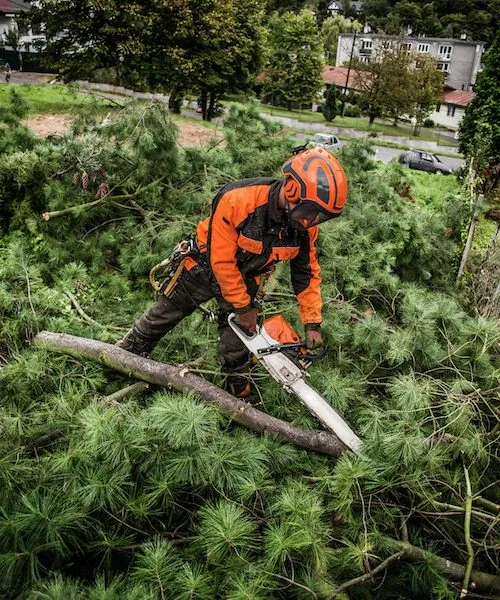
Crown reduction, deadwooding and clearance pruning done to keep the tree alive and stable.
Learn more →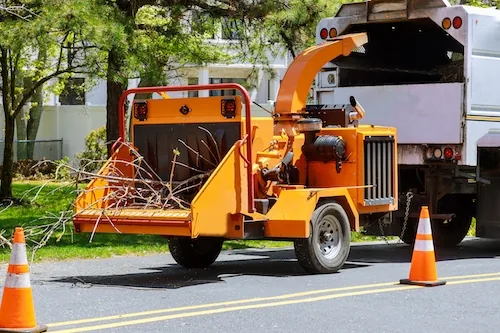
Stumps ground below ground level so you can turf, pave or replant over the top.
Learn more →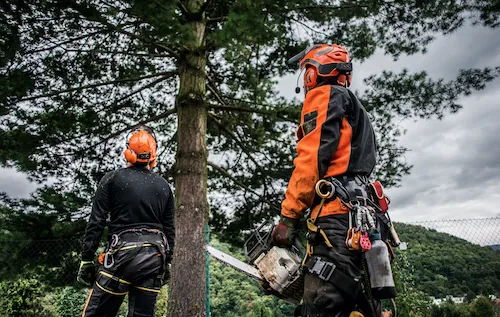
Cocos, Bangalow and Canary Island date palms cleaned up, reduced or taken out section by section.
Learn more →
Fallen limbs, split trunks and trees on roofs after a southerly or an east coast low.
Learn more →
AQF Level 5 reports for council applications, development consent and neighbour disputes.
Learn more →Usually yes. Waverley, Randwick and Woollahra councils all run tree preservation orders, and each one requires consent before most trees are removed or heavily pruned. Some small, exempt or declared-weed species are excluded, and genuinely dangerous trees are handled differently. Ring the council or ask us to check before you book any work.
Anywhere from about $300 for a small, clear-access tree to $20,000 for a very large tree in a difficult position. The Eastern Suburbs sits at the higher end of that range because access is tight, most work is over roofs and gardens, and a lot of jobs need a crane or a hand dismantle. Every quote here is site-specific.
Emergency and storm response runs 24/7. After a southerly buster or an east coast low the queue is triaged by risk, so a limb resting on a roof or a trunk across a driveway gets moved ahead of a tree that has simply dropped branches onto a lawn. Call rather than email if the tree is unsafe right now.
Yes. Limbs are chipped on site and removed, and the chip can be left as mulch if you want it. Larger trunk sections are cut to a size that can be carried out through a terrace house or a side path and taken off site. Debris removal is part of the quoted price unless the quote says otherwise in writing.